Evidence, not adverts
Know what to take, and what to skip
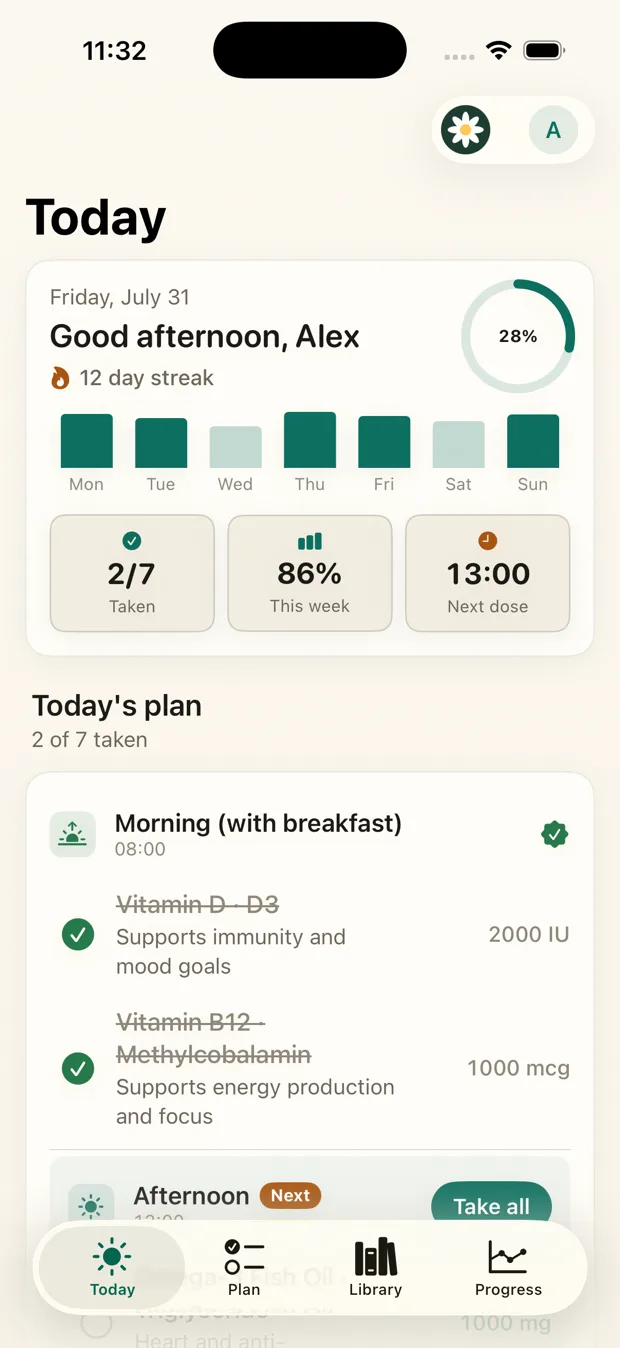
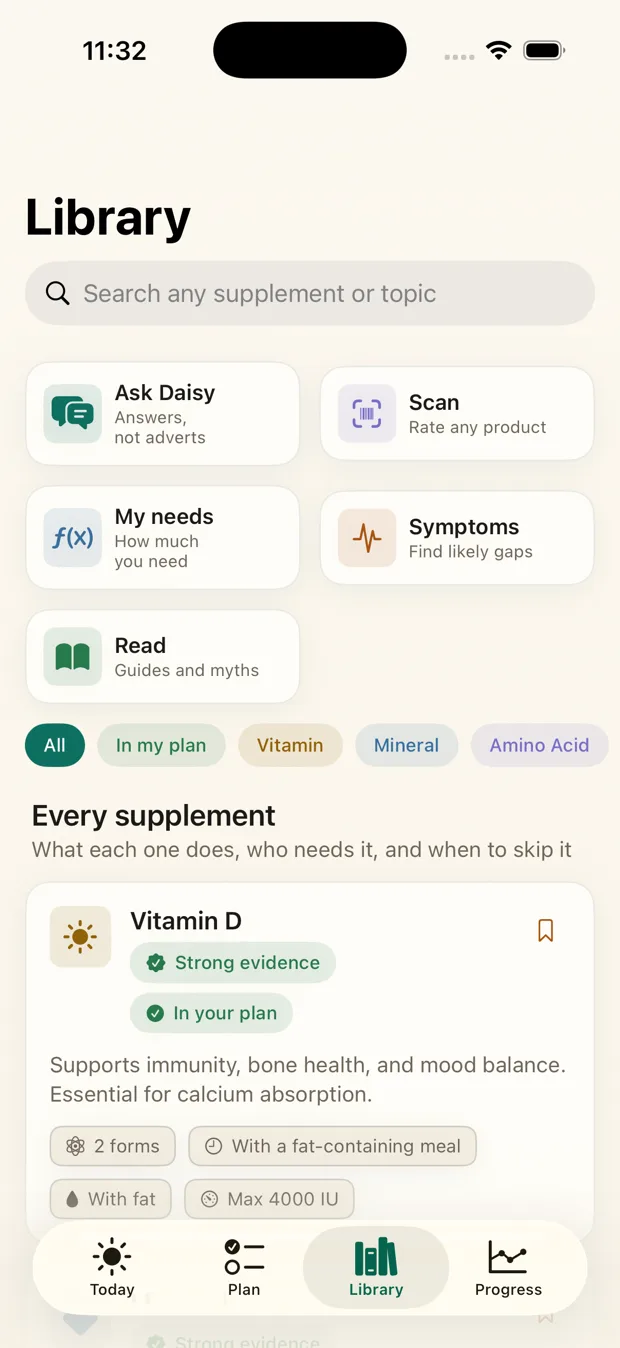
Half the supplement aisle does nothing, and the labels will not tell you which half. Daisy shows you what your body actually needs, which form is worth the money, and warns you before a routine goes over a safe limit.
Free on iPhone. No adverts, no affiliate links, nothing sold to you.
The problem
Search "magnesium" and you get 400 results and no answer
Seven different forms, doses that range from useless to unsafe, and a front label designed to look like the biggest number wins. Nobody is telling you which one to put in your basket, because almost everybody in that aisle is selling something.
You cannot tell what works
Two bottles say "Magnesium 500 mg". One delivers a useful dose. The other passes straight through you. The label looks the same.
You cannot tell what is too much
A multivitamin, a separate zinc and a greens powder can quietly push you over a safe limit. No single label knows what the others contain.
You cannot tell who to trust
Reviews are gamed, influencers are paid, and "clinically studied" is a marketing phrase, not a standard.
The form decides everything
Same mineral. Wildly different results.
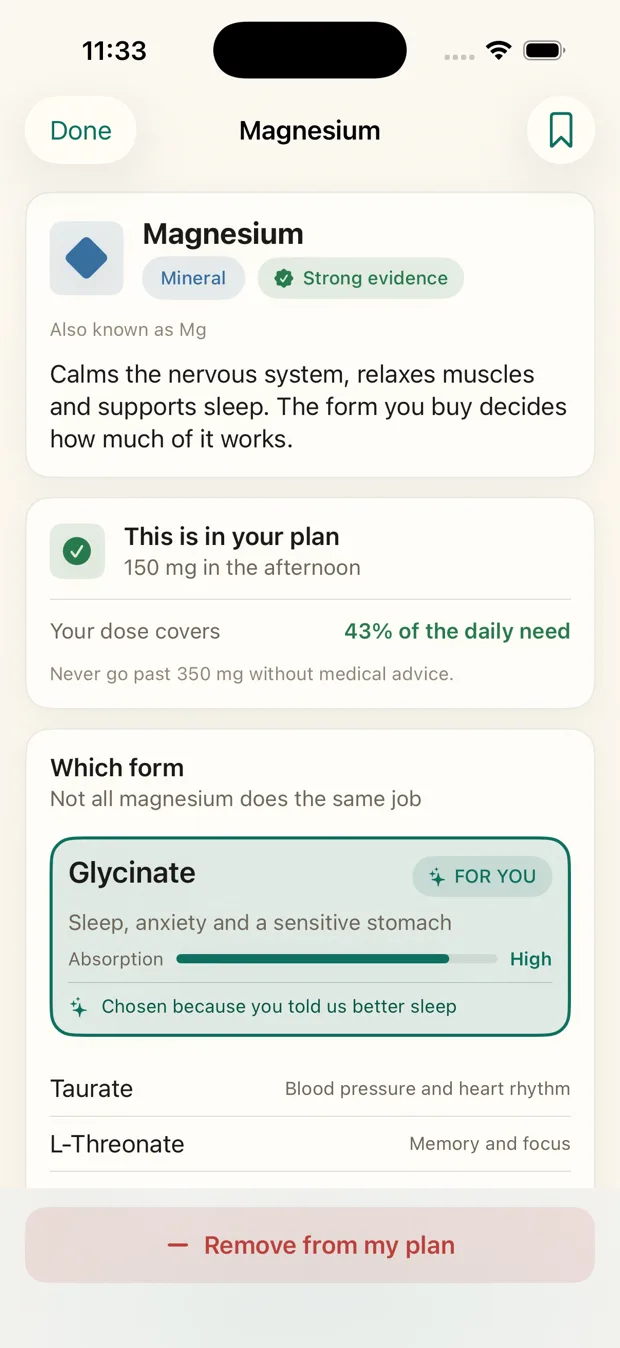
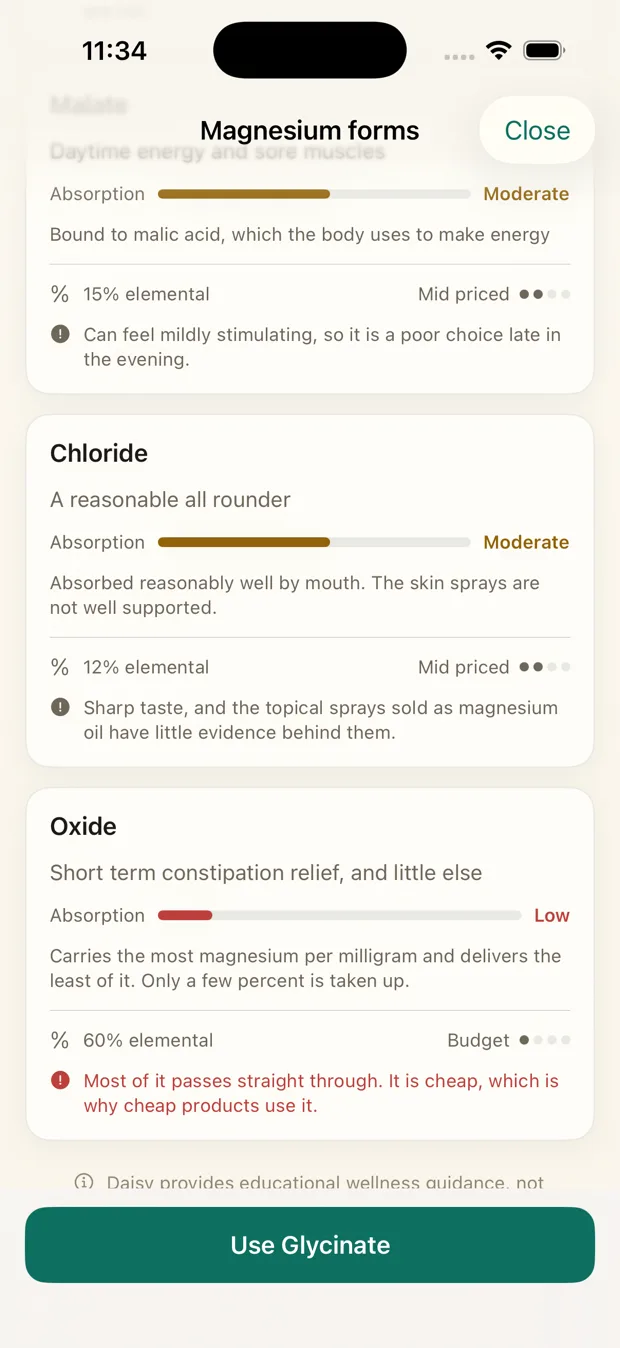
Magnesium oxide is 60% magnesium by weight, more than any other form, and your body takes up only a few percent of it. Glycinate is 14% magnesium and most of it arrives.
The bottle claiming the biggest number is usually the one delivering the least. Daisy shows both figures side by side, so the contradiction is visible instead of buried.
Safety
A warning before you go too far, not after
Daisy adds up every dose in your routine, per nutrient, and compares the total against published upper limits. Not per bottle. The whole plan.
That is the number that matters, because nothing on a label knows what else you are taking. It is also the reason the app exists: taking too much of the wrong thing is easier than most people think.
The Daisy Score
Six questions, asked of every product
Most product ratings measure whether a factory followed the rules. Useful, and not the same as whether the thing in your hand will do anything.
Daisy weights the two criteria that actually decide that outcome, ingredient form and dose accuracy, at nearly half the total score.
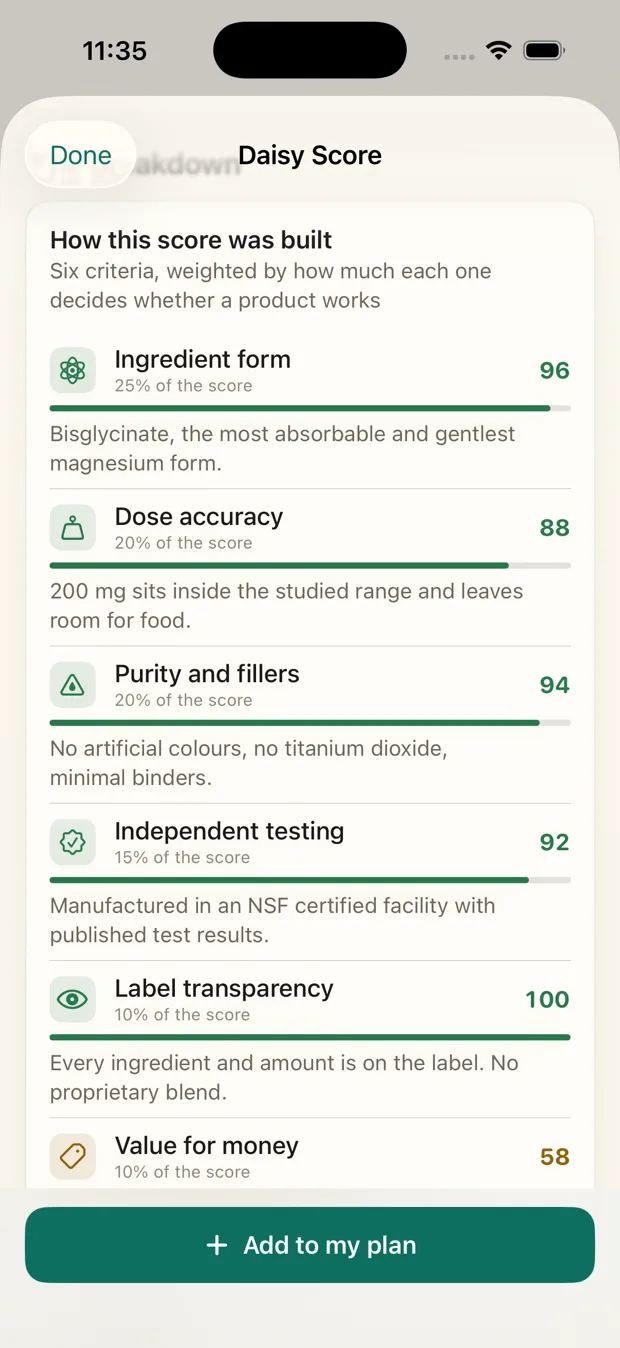
| What we check | Weight | Why it carries that weight |
|---|---|---|
| Ingredient form | 25% | Decides how much of the label figure reaches you at all |
| Dose accuracy | 20% | Too little does nothing; too much is a risk |
| Purity and fillers | 20% | What is in there that has no business being there |
| Independent testing | 15% | Whether anyone outside the company checked |
| Label transparency | 10% | Proprietary blends hide the doses that matter |
| Value for money | 10% | Cost per useful dose, not cost per bottle |
How it works
About four minutes to a plan built around you
Tell Daisy about your body
Age, diet, sleep, stress, what you already take, and anything a doctor has told you. Every question changes something in the plan, or it is not asked.
Get a plan, with reasons
Each item says why it is there, which form to buy, when to take it, and what it interacts with. Nothing appears without an explanation.
See whether it is working
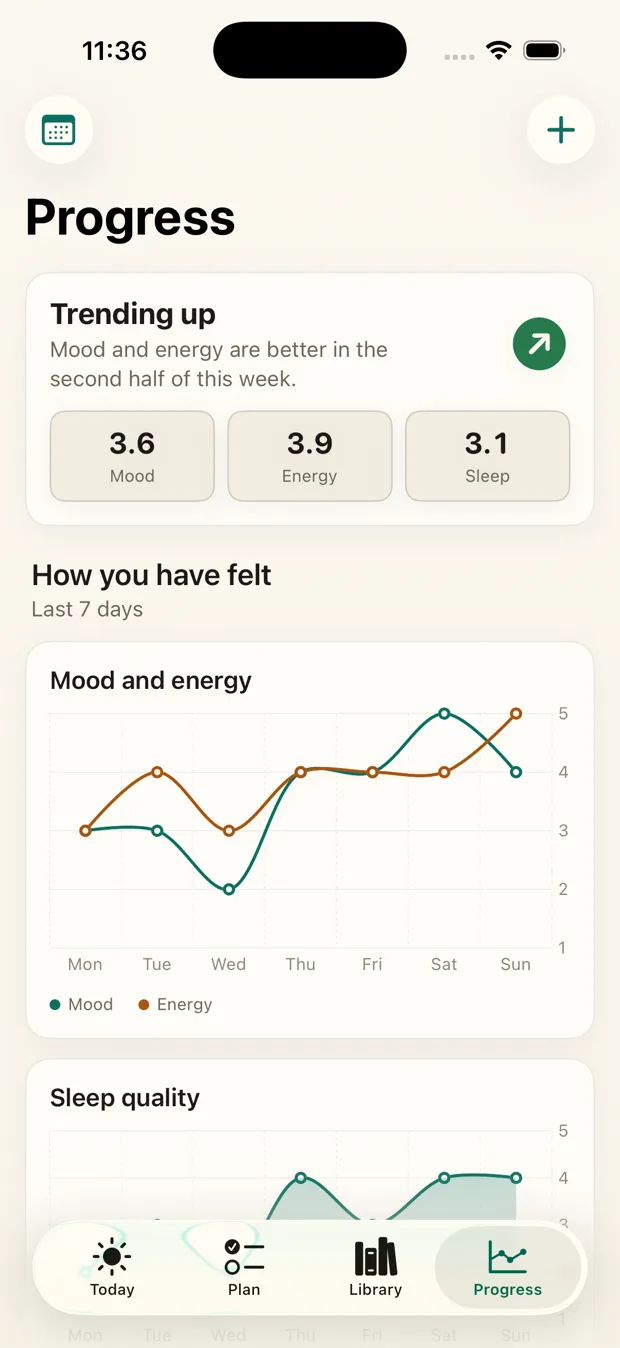
Log energy, mood and sleep alongside what you actually took, so you can tell the difference between a habit and a result.
Consistency beats intensity
Daisy tracks what you take against how you feel, and shows the two together. Not to gamify your health, but because it is the only honest way to answer the question everybody eventually asks: is any of this doing anything?
Questions
Straight answers
Do you sell supplements, or take commission?
No, and we do not plan to. There are no affiliate links in Daisy and no sponsored placements. The moment an app earns money when you buy something, its advice stops being trustworthy, and that advice is the entire product.
Where does the information come from?
Reference intakes and upper limits come from published sources such as the NIH Office of Dietary Supplements and EFSA. Every supplement page and article lists the references its guidance came from, and you can open and read any of them yourself.
Is Daisy medical advice?
No. It is educational wellness information. It does not diagnose, treat, cure or prevent any disease and it is not a substitute for your doctor or pharmacist. If you take prescription medication or have a health condition, talk to them before changing anything.
What does it cost?
Daisy is free to start. A premium subscription unlocks the full library, every expert protocol and unlimited product scans. Pricing is shown in the app before you are asked for anything, and you can cancel from your Apple account at any time.
What happens to my health data?
Your profile, plan and logs stay on your device. We do not sell data, and we do not share it with supplement companies. See the privacy policy for the detail.
What do I need to run it?
An iPhone running iOS 17 or later. Daisy works offline for your plan and your logs; it needs a connection only to refresh the supplement library and to check a subscription.
Get Daisy
Stop guessing in the supplement aisle
Free to download. Build your plan in about four minutes, and find out what you actually need before you spend another penny on something that does nothing.
Requires iOS 17 or later. Premium is optional and priced in the app.